

Introduction
Latex allergies don’t start with pollen or pets they often begin with everyday exposure. Gloves, medical supplies, balloons, elastic bands, and household products can all contain natural rubber latex. For sensitive individuals, repeated exposure may trigger immune reactions that range from mild skin irritation to serious systemic symptoms.
In 2025, latex allergy awareness is growing, especially among healthcare workers, patients with frequent medical procedures, and individuals with underlying allergic conditions.
What Is a Latex Allergy?
A latex allergy occurs when the immune system reacts to proteins found in natural rubber latex. Over time, repeated exposure may cause the body to recognize latex as a threat, triggering allergic inflammation.
Latex allergy is not the same as simple skin irritation. It involves immune activation and may worsen with continued exposure.
Who Is Most at Risk for Latex Allergy?
Certain groups are more likely to develop latex sensitivity:
- Healthcare workers and caregivers
- Patients with frequent surgeries or catheter use
- Individuals with eczema or chronic skin conditions
- People with multiple existing allergies
Latex allergy is also associated with cross-reactivity to certain foods.
For broader allergy patterns, see:
What Type of Allergies Are There?
Common Latex Allergy Symptoms
Symptoms may appear immediately or shortly after contact.
Mild to Moderate Symptoms
- Itchy or red skin
- Hives
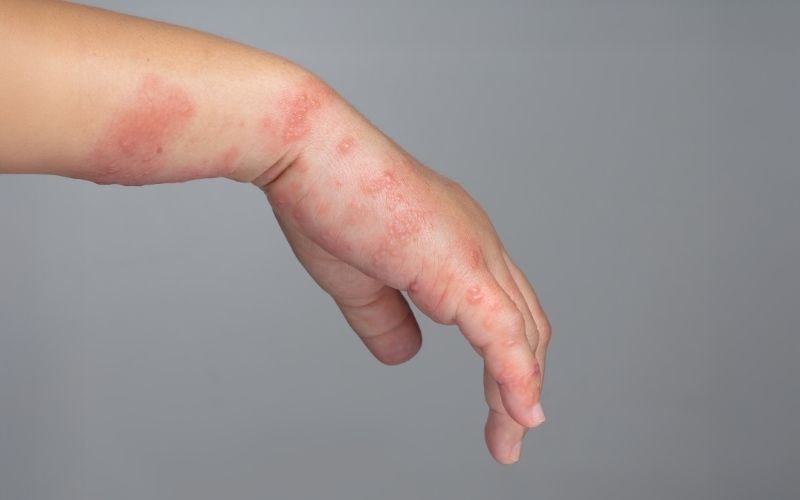
- Rash at contact site
- Watery eyes or sneezing
More Serious Symptoms
- Nasal congestion
- Wheezing or chest tightness
- Shortness of breath
- Swelling of lips or throat
In severe cases, latex exposure may trigger anaphylaxis, a medical emergency.
Latex Allergy vs Contact Dermatitis
Not all reactions to gloves or rubber products are latex allergies.
| Reaction Type | Cause | Immune-Based? |
| Latex allergy | Rubber proteins | Yes |
| Contact dermatitis | Chemicals, friction | No |
Accurate diagnosis is essential to determine the right treatment approach.
Learn how allergy testing works here:
Allergy Testing at Home: What Works, What Doesn’t, and What’s New in 2025
Latex–Food Cross-Reactivity (Latex-Fruit Syndrome)
Some individuals with latex allergy may also react to foods such as:
- Bananas
- Avocados
- Kiwi
- Chestnuts
This overlap highlights how interconnected allergic responses can be across systems.
Related reading:
Oral Allergy Syndrome: Why Foods Can Trigger Symptoms
Treatment Options for Latex Allergy
Avoidance & Symptom Control
The first step is minimizing exposure:
- Latex-free gloves and medical supplies
- Product label awareness
- Emergency preparedness for severe reactions
Short-term medications (antihistamines, nasal sprays) may help relieve symptoms but do not change sensitivity.
Learn more:
What Is the Best Allergy Medicine?
Long-Term Allergy Management
For patients with multiple allergies or escalating symptoms, a personalized care plan may include immune-focused strategies.
Educational content from AllMedRx helps patients understand how individualized approaches may support complex allergy profiles under medical supervision.
When to Seek Professional Evaluation
Consider evaluation if:
- Symptoms worsen with repeated exposure
- Reactions involve breathing or swelling
- You work in healthcare or undergo frequent procedures
Initial intake and evaluation:
Email intake@allergyworx.com
Education or follow-up questions:
Email care@allergyworx.com
Final Thoughts
Latex allergy often hides in plain sight triggered by everyday products and mistaken for irritation. With proper identification and a personalized plan, many patients can reduce reactions and prevent escalation.
Understanding your triggers is the first step toward safer, more confident daily living.